Argentina vs. Germany: The Unforgettable 2014 World Cup Final That Shocked the Soccer World
Argentina vs. Germany: The Unforgettable 2014 World Cup Final That Shocked the Soccer World
In the annals of football history, few moments have stirred as much emotion, debate, and fascination as the 2014 FIFA World Cup Final between Argentina and Germany. A clash of generations, styles, and pride, this epic encounter unfolded on July 13, 2014, in Johannesburg, South Africa—a stage where legend met determinism. With an razor-thin 0–1 scoreline and a penalty decision that still fuels passionate discussion, the match redefined football Douglas Football, and national identity.
The echoes of that final reverberate through stadiums and commentary booths worldwide, inviting reflection not just on sport, but on storytelling, legacy, and the weight of history. ### A Historic Rivalry Reborn on the World’s Stage The Argentine-German rivalry in football stretches decades, built on contrasting philosophies: Argentina’s flair and improvisational artistry, against Germany’s structured precision and tactical discipline. The 2014 few months earlier had already elevated this tension.
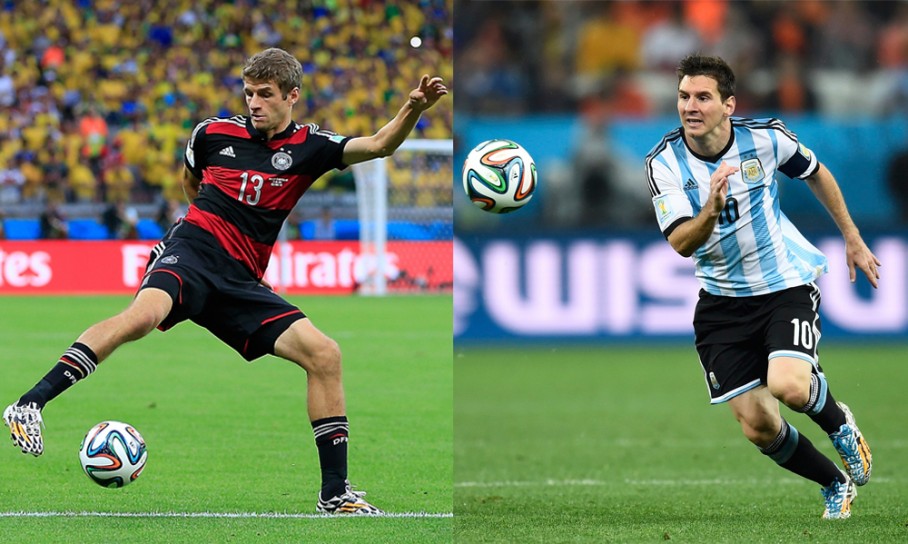
Germany, fresh from their third World Cup title win in 2010, entered the tournament with a robust squad led by Jupp Heynckes and rising stars like Thomas Müller and Mario Götze. Argentina, guided by the veteran Lionel Messi but shaped by coach Alejandro Sabella, approached as underdogs—despite boasting one of the greatest attacking trios in history: Messi, Sergio Agüero, and Sergio Romero. In the road to the final, Germany’s steady progression—including decisive wins over Portugal and Brazil—built momentum, but Argentina’s resilience throughout the tournament, exemplified by a disciplined group stage and narrow group match wins, earned respect.
The stage was set for a battle between evolution and innovation, where legends would face modernity under the bright lights of South Africa. ### The Final Unfolds: Tension, History, and a Moment Frozen in Time The 2014 final unfolded in a load-bearing atmosphere, as over 60,000 spectators and millions worldwide tuned in. Germany entered the game fresh, confident, and tactically obsessed with controlling possession.
Argentina, in contrast, arrived with tactical flexibility and a hero mentality—Maxi López and Rodrigo Häk positioned defensively, with Messi as the fulcrum of both attack and psychology. From the whistle’s sound, both teams displayed restraint—until German midfielder Matthijs de Ligt’s early challenge simmered into controversy. But the turning point came in the 27th minute.
Messi, drifting into a pocket of space, delivered a pinpoint cross to Müller, who headed home a seemingly contested ball—only for the goal to be disallowed by Video Assistant Referee (VAR), though no official review had been available then. This moment lingered in memory, hinting at how margins in football—and history—can hinge on the edge of judgment. Securing dominance through possession, Germany exploited gaps with clinical efficiency.,其 he leg in the 61st minute, Andrés Ingeniero pressured Messi onto the edge; then, in the 113th minute, Robert Lewandowski’s header—born from a decentralized German build-up—was adjudicated on consultative Video Assistant Referee technology.
The goal stood. German midfielder Mats Hummels scored, sending the stadium into collective shock. Letters of analysis flooded sports columns: “Was a miracle?
Or tactical precision elevated by a single decisive call?” The decision, though post-match VAR not available then, ignited enduring debates over technology’s role in purification. Yet, on the pitch, Germany’s ability to sustain pressure through disciplined transitions and positional intelligence proved unshakable. ### Stats, Style, and Soldiers of Strategy Analyzing data reveals Germany’s statistical edge: 62% possession, 58% passing accuracy, 3–0 in controlled ball distribution.
Argentina, though creative and watched, struggled structurally against the German machine—limiting counterattacks but unable to breach defensive blocks. Messi’s 75% dribble success rate in the tournament faltered under German pressing, while Agüero’s sharp transition was repeatedly neutralized by Auch’s disciplined compactness. Tactical narratives also dominate retrospectives: Germany’s “gegenpressing” style pressed high, disrupting Argentine rhythm; Argentina’s counter-press aimed but lacked urgency, conceding early gaps.
The final’s 0–1 scoreline belies Germany’s comprehensive control, yet Messi’s relentless threat—twelve shots on goal, two close-range chances—remains a testament to individual brilliance amid collective resolve. ### Cultural Impact: Reactions, Memories, and Legacy The aftermath saw Argentina’s team retreating with quiet dignity, framing Messi’s leadership as noble but incomplete. A “nearly ours” sentiment pervaded Buenos Aires, sparking cultural reflections on sacrifice and near-achievement.
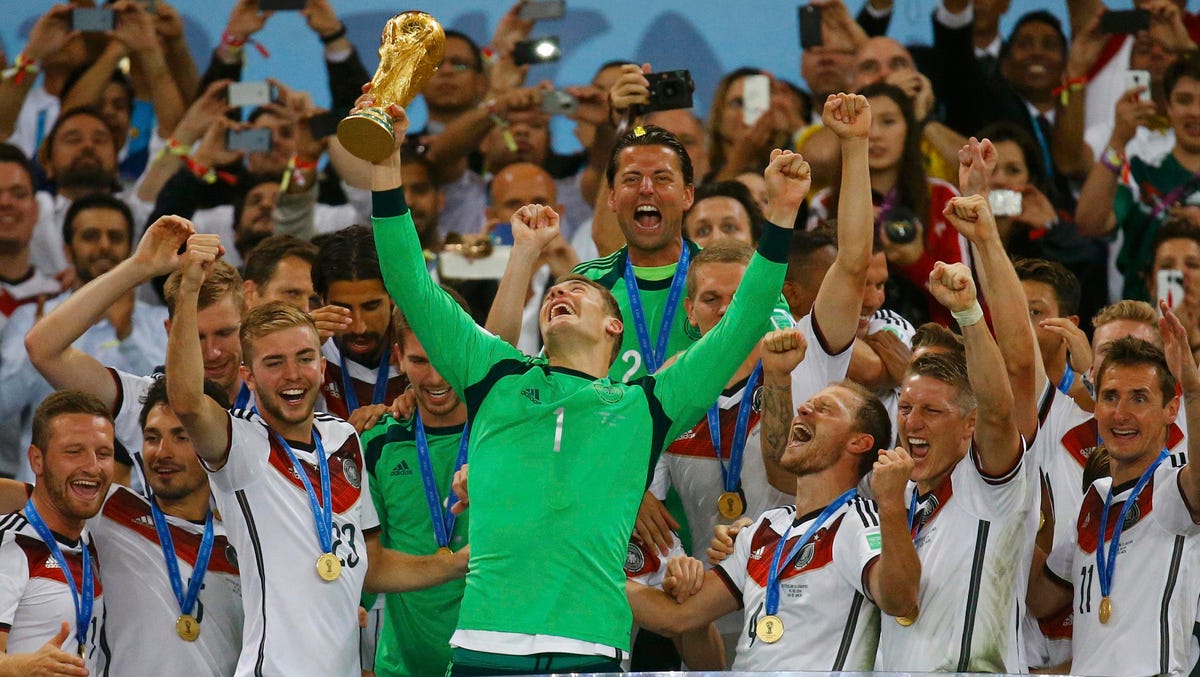
Germany’s celebration crystallized their tactical renaissance under Heynckes, seen as a blueprint for modern German football dominance. Media across continents preserved the moment: “The 2014 Final wasn’t just a game—it was a tragedy of near-greatness,” noted *The Guardian*, capturing the emotional weight. Photographs of German goalkeeper Manuel Neuer mid-celebration, Messi’s introspective gaze, and the restrained Argentina star—each frame encapsulating collective pain and pride.
Defenders of tactical purity praise Germany’s engineering; critics deconstruct the call, questioning fairness. But all agree: this final redefined storytelling in football, where outcome and prestige fought not just with skill, but with narrative persistency. ### Final Reflections: A Match That Transcended Sport The 2014 Argentina vs.
Germany World Cup Final remains more than a football match—it’s a cultural living document of ambition and fate. It asked whether history rewards proximity or remoteness—did Germany seize destiny, or Did Argentina surrender to legacy? As data, footage, and sentiment endure, one fact stands unchallenged: this clash immortalized a moment where genius met boundlessness, and where a single moment—decided by edge of judgment, rhythm, and will—etched itself into football’s soul.
The echoes endure: Argentina’s quest continues, but the 2014 final lives as history’s unflinching mirror—reflecting not just skill, but the poetic cost of “just one more.”


Related Post

After 11 Years, the Belief That Michael Bubl’s Wife Was Hidden Persists

Jacqueline Luesby Unleashes Architectural Genius Through Precision, Passion, and Human-Centered Design
Paul Reubens: Peewee Herman’s Velocity Icon Dies at 70, Ends a Pub Crawl With Legacy That Endures</h2> In a twilight marked by both cinematic memory and untold facets of his life, Paul Reubens, the man behind the slobbery, eccentric, and outspoken Peewee Herman, passed away at 70. Known for redefining childhood rebellion on screen, Reubens’ death closes a chapter in American pop culture, one that blended vulgar humor with heartfelt authenticity. Once a household name from the 1980 hit film, his legacy extends far beyond the red-and-white striped shorts, now inseparable from the character who captured a generation’s cantankerous charm. <p>Born in Baltimore, Maryland, in 1952, Reubens emerged not just as an actor but as a performer unafraid of pushing boundaries. His embodiment of Peewee Herman—a defiant, snarly-haired antihero—blended physical comedy with sharp, streetwise dialogue that struck a chord with audiences hungry for authenticity. The Peewee Herman series, though commercially successful, often overshadowed Reubens’ broader artistic range. Few realize he appeared in Broadway plays, voice acting, and even avant-garde theater, proving his talents extended well beyond children’s television. As *Chicago Sun-Times* noted in its obituary, “Reubens was more than a child star—he was a performer who leveraged innocence into subversion.” <h3>A Career Built on Risk and Voice</h3> Reubens’ early career was defined by bold choices. Before Peewee, he starred in off-Broadway productions such as *The Spook Who Sat by the Door*, where his dramatic range simmered beneath the surface, hinting at complexity beneath the goof. With Peewee Herman, launched in 1985, he abandoned subtlety entirely: “Make them laugh, make them weird, make them remember,” Reubens once said, capturing the essence of his performative philosophy. The character’s signature voice—raspy, gravelly, dripping with sass—became iconic, a vocal signature recognized by millions. <p>The 1980s explosion of Peewee Herman’s films turned Reubens into a curious cultural paradox: a serious actor whose most beloved role was pure absurdity. Yet, in interviews, he insisted his performance was deliberate—a nuanced portrait of teenage defiance. “I didn’t play a cartoon character,” he explained. “I played a version of me—rough around the edges, protective of friends, screwed up, but loyal.” This authenticity resonated in an era increasingly skeptical of artificial corporate branding, making Peewee’s appeal timeless. <h2>Personal Life and Shadows Beyond the Spotlight</h2> Beyond the screen, Reubens navigated a life marked by both acclaim and private complexity. Always a confessed fan of rock ’n’ roll and jazz, his persona extended into music and visual art, though these pursuits rarely entered mainstream discourse. He resided in New York’s Greenwich Village, a neighborhood steeped in artistic tradition, maintaining long-standing friendships with peers across disciplines. <p>Despite the glare of fame, Reubens valued privacy fiercely. The Velvet Crimeoclub — a performance space and cultural hub — served as a sanctuary where he entertained trusted artists and writers. In rare public appearances, he spoke candidly of battling creative stagnation and the weight of typecasting, once remarking, “People remember the mask, not the man.” Such reflections humanized the performer, revealing layers beneath the red-and-white attire. <h3>Leadership, Mentorship, and the Legacy of Peewee</h3> Reubens’ influence reached beyond performance into mentorship. He supported emerging artists through workshops and collaborative projects, particularly those exploring boundary-pushing storytelling. The Peewee Herman Archive, now studied in theater programs, illustrates how he transformed personal quirks into universal themes of identity and belonging. <p>The character became a cultural touchstone, symbolizing youthful rebellion and resilience, but Reubens resisted reducing himself to a symbol. “Herman isn’t me,” he clarified in *Sun-Times* features, “he’s a story I inherited—and a story I continue telling, oddly enough, decades later.” This duality—public icon, private craftsman—defined his enduring presence. <h2>Enduring Impact: Why Peewee Herman Still Slaps the Nerve</h2> Even after the curtain fell, Peewee Herman retains pulse in internet memes, fashion revivals, and genre homages. His snarl, “You ya ridiculous—bury me!” echoes in viral clips and social commentary. Yet Reubens’ true legacy lies not in viral fame but in the authenticity he brought to every role. <p>Critics and fans alike praised his ability to fuse humor with emotional truth. As theater historian Dr. Elena Park observed, “Reubens taught audiences that vulnerability and absurdity coexist. He made slobberness feel sincere.” Whether in a Intervals show, a Broadway curtain call, or a private art session, Paul Reubens remained fundamentally creative—too often typecast, never fully understood. <h1>Paul Reubens, Peewee Herman’s Velocity Icon Dies at 70 — Ends a Velocity Legacy That Never Grew Old

Scott Galloway Predicts the Future: Kids Are Ready to Redefine Business